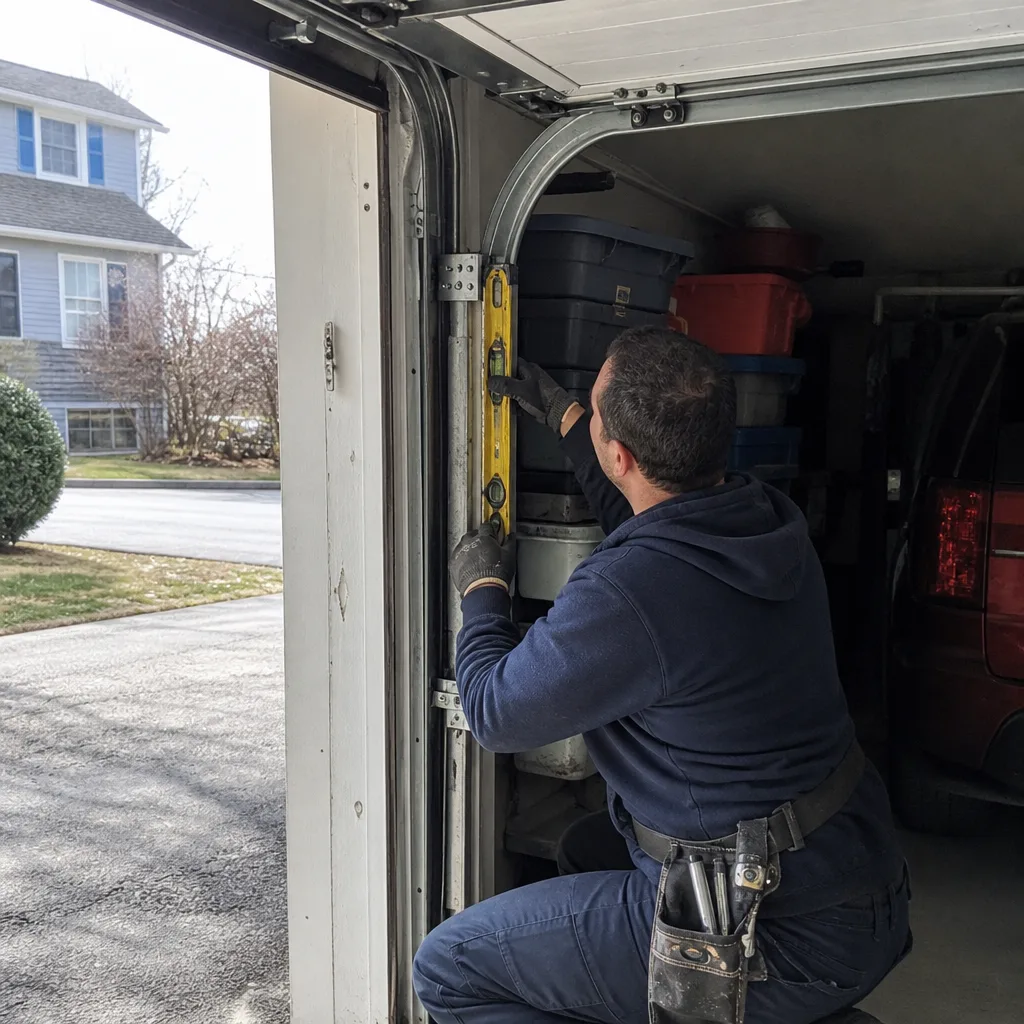
Last updated November 20, 2026
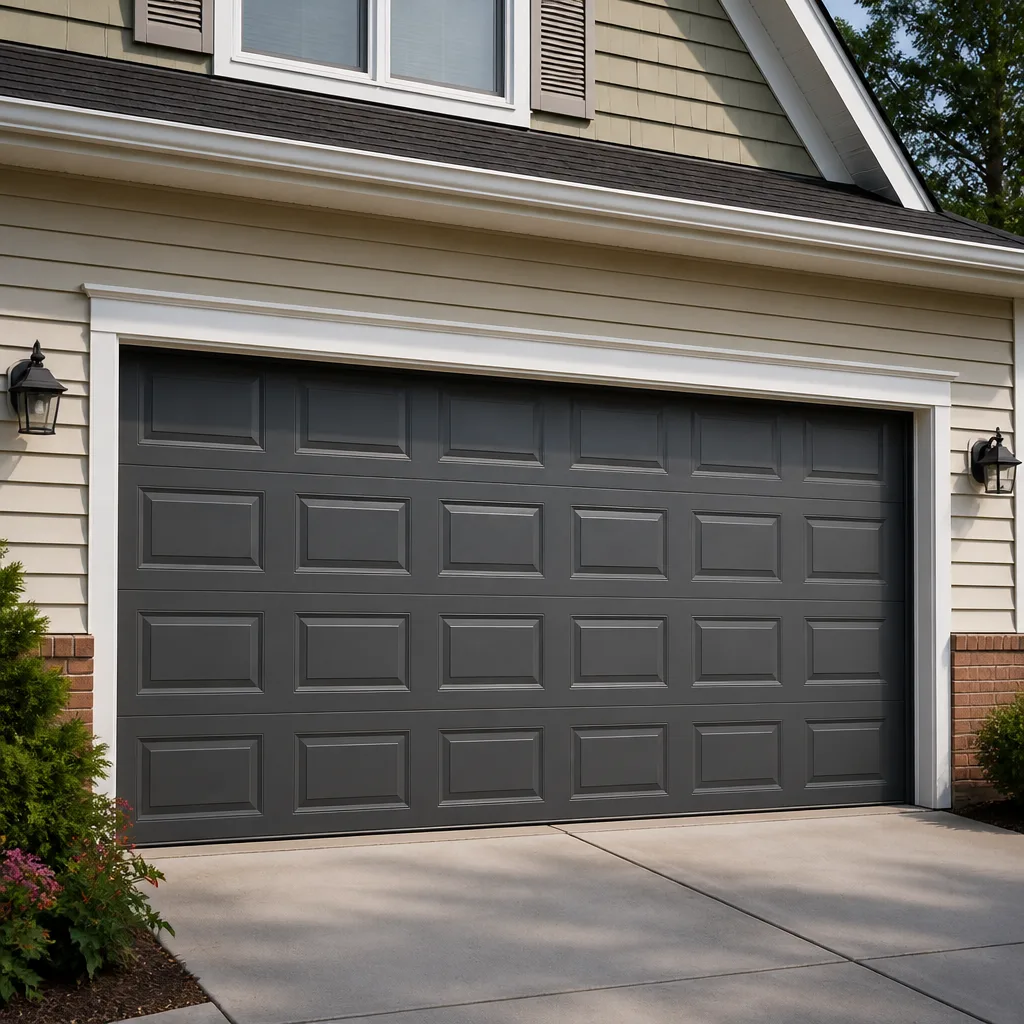 Raised-panel steel
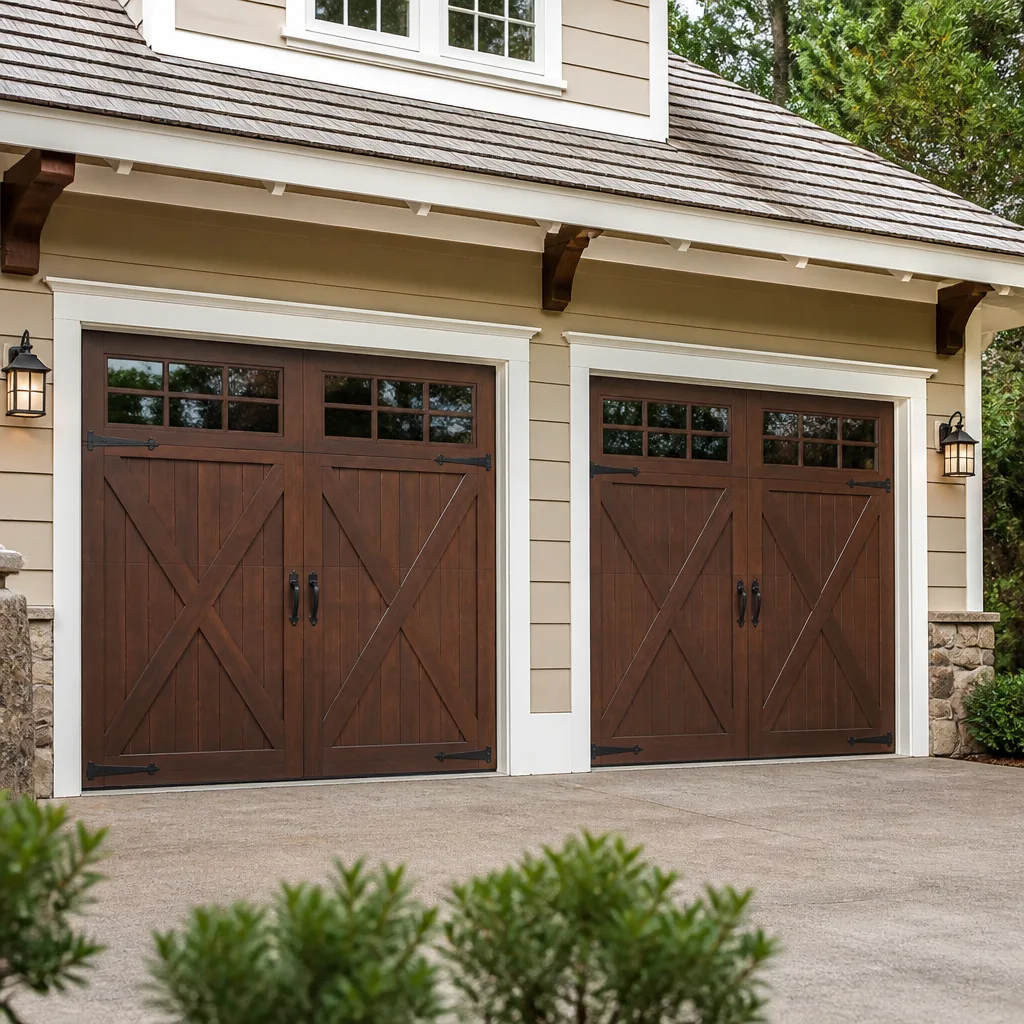 Carriage house
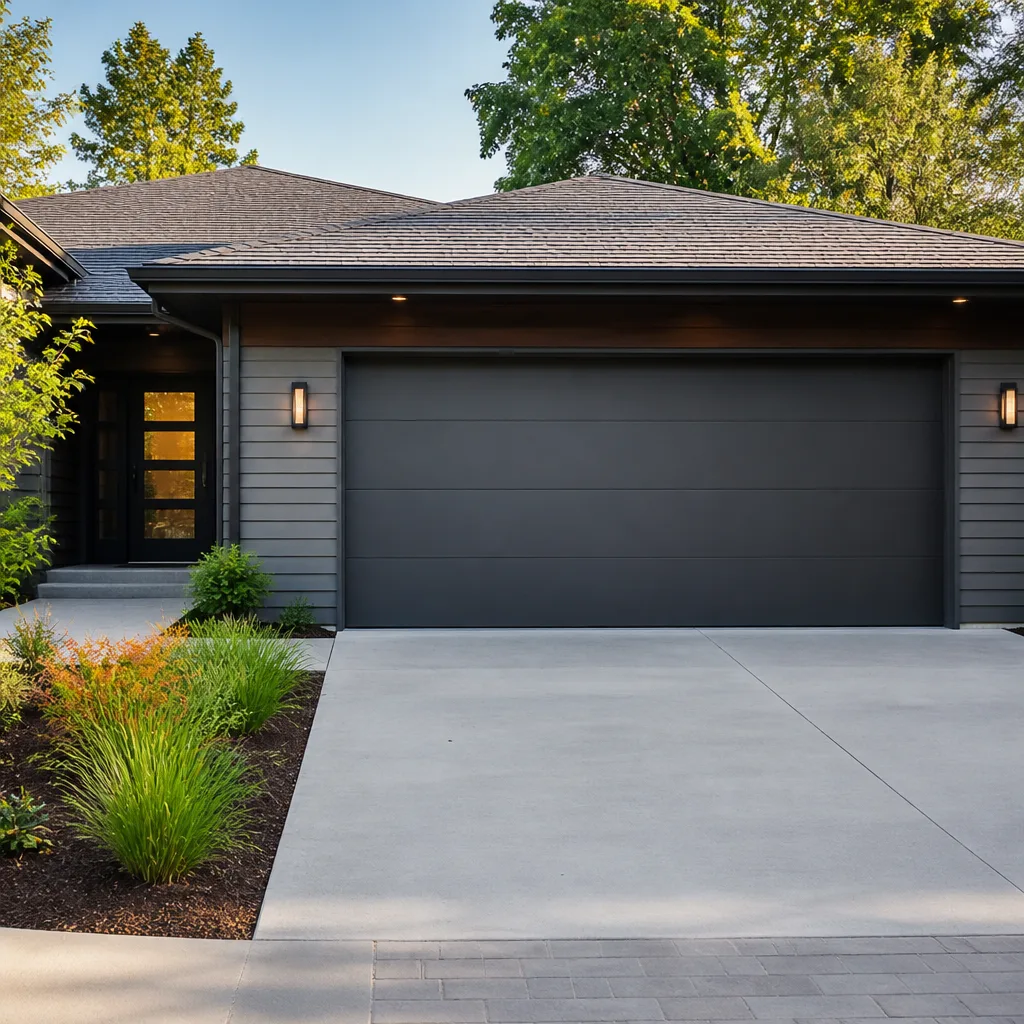 Modern flush
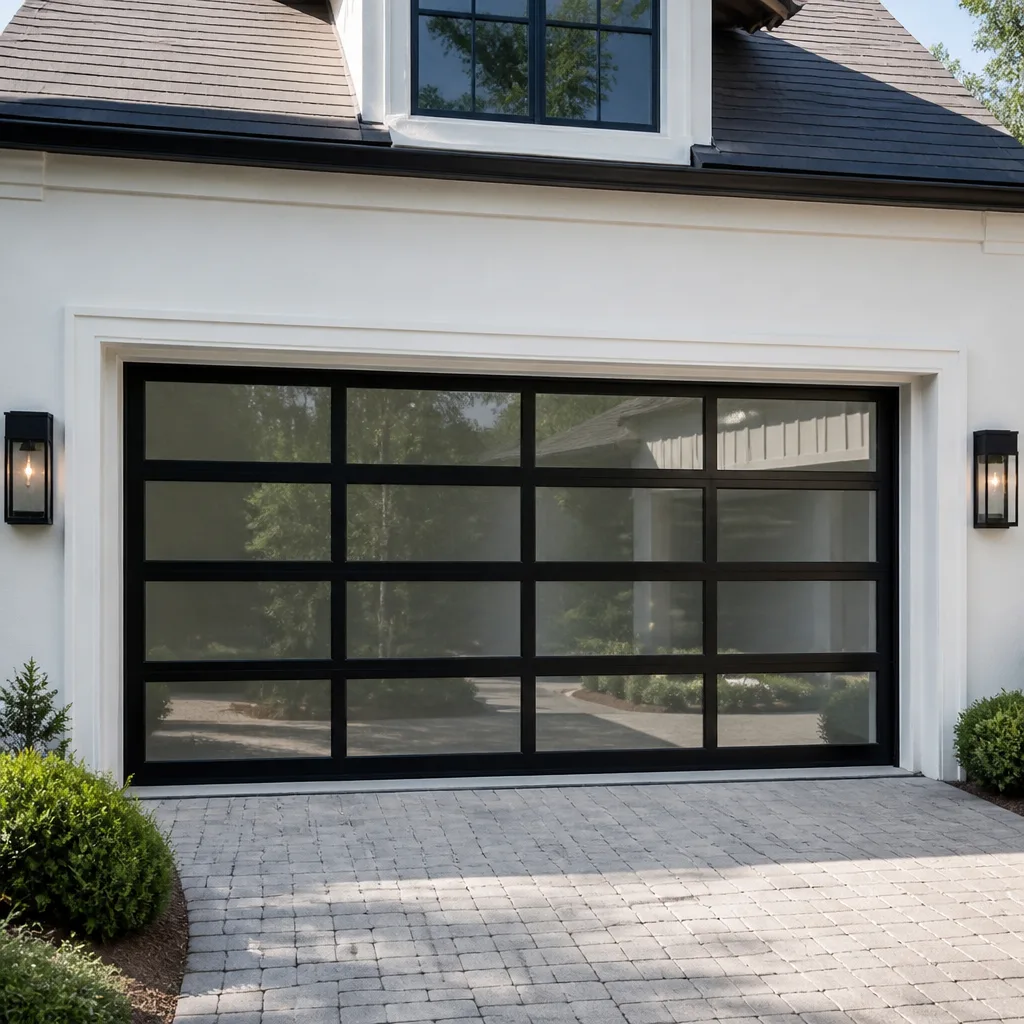 Full-view glass
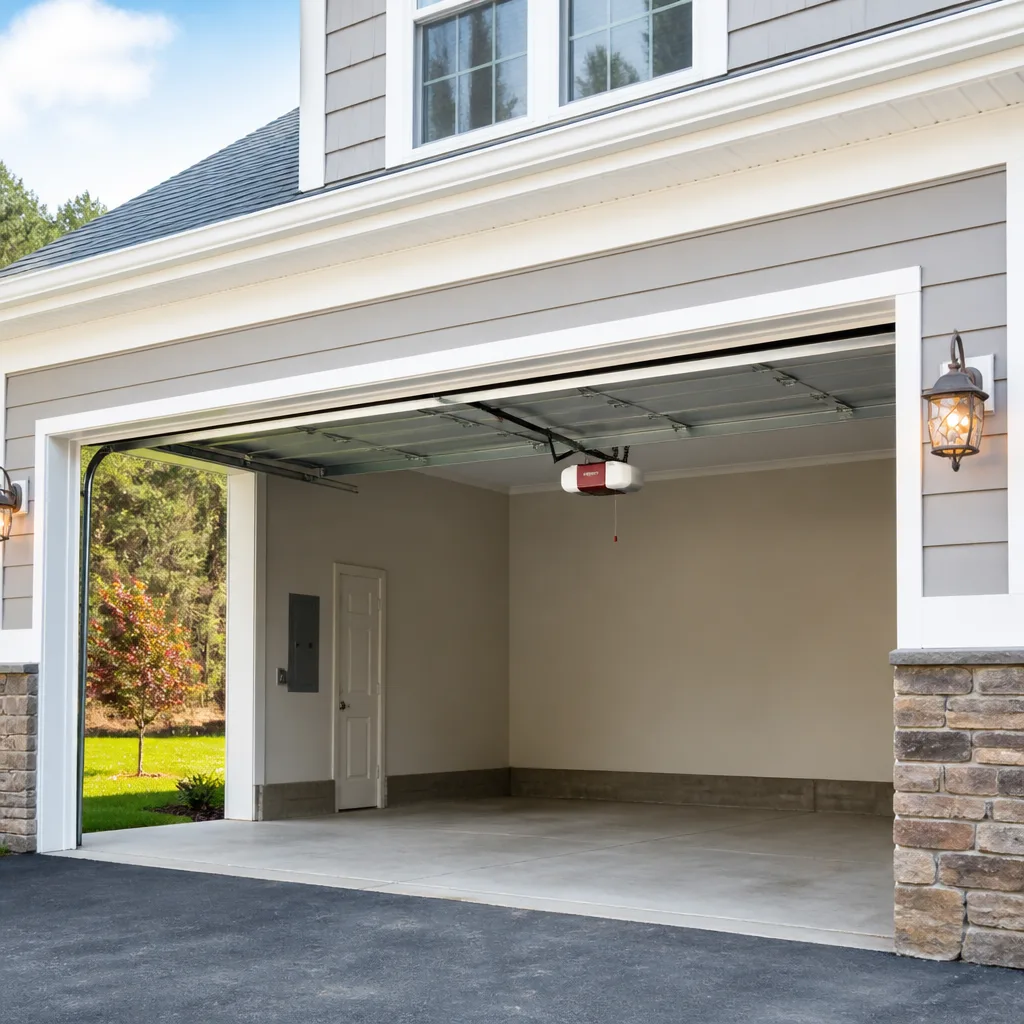 LiftMaster openers
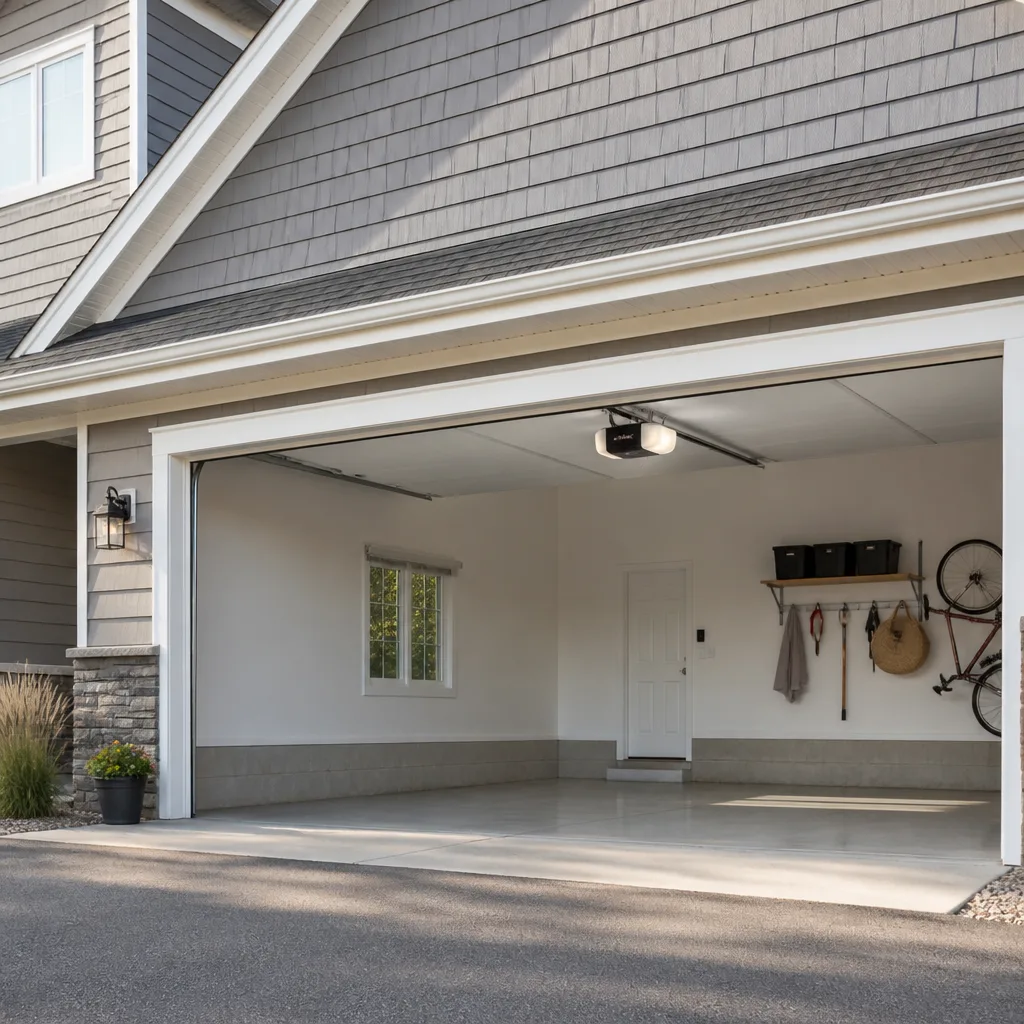 Chamberlain openers
Full 25-point door and opener safety check with every visit - springs, cables, rollers, tracks, and your LiftMaster or Chamberlain opener included
You get a price before we start. It does not change when the pro arrives.
Get your free estimateThe Complete Guide to Garage Doors in Waterbury
Most homeowners in Waterbury treat the garage door as a single object, one button that opens one big panel. That’s the misconception worth correcting first: what you own is a system. A door, a track, a set of springs, a motor, and a safety reverse that all work together. When something fails, the symptom shows up at the button, but the cause is usually buried elsewhere. A door that won’t budge in January is often a spring that gave out, not an opener that died. This guide walks through how each part works, how to read symptoms correctly, and what a fair repair looks like in Waterbury, from Bunker Hill to the East End.
Quick Answer
A garage door is a counterbalanced mechanical system: springs lift most of the door’s weight, the opener only guides it. When a door stops working, the cause is usually a spring, a track, a roller, or the opener’s safety circuit, not the door itself. Most problems are repairable, and a proper diagnosis comes before any replacement talk. Keep reading for how each part fails and what repair typically involves.
Styles & brands we work with
- Raised-panel steel
- Carriage house
- Modern flush
- Full-view glass
- LiftMaster openers
- Chamberlain openers
Table of Contents
- How a Garage Door Actually Works
- Springs: The Part That Does the Heavy Lifting
- Openers: Repairing the Motor, Not Replacing the Door
- Reading the Symptoms: What Your Door Is Telling You
- How Connecticut Seasons Stress the System
- What Garage Door Repair Costs in Waterbury
- Why Brand Familiarity Saves You Money
- Safety Rules Nobody Should Bend
How a Garage Door Actually Works
A standard sectional door weighs a lot, far more than a person can lift comfortably by hand, and the springs carry nearly all of that weight. The opener is a small electric motor that pushes and pulls a door that the springs have already made close to weightless. This matters when something breaks, because it tells you where to look first.
The parts break down into three groups:
- The door itself: panels, hinges, rollers, tracks, cables, and the bottom weather seal.
- The spring system: torsion springs above the door on a center shaft, or extension springs running along the horizontal tracks.
- The opener: the motor unit, the drive (chain, belt, or screw), the wall switch, the photo-eye sensors, and the remote or keypad.
All three fail at different rates, and each has its own set of symptoms. A grinding noise overhead is rarely an opener issue. A motor that hums but doesn’t move the door is rarely a spring issue. Getting the group right is the whole game, and that’s why we diagnose before recommending anything. In Waterbury’s older housing stock, we also see a mix of door vintages, from doors that predate modern safety sensors to doors installed with a recent opener replacement, and the repair path differs on each.
Springs: The Part That Does the Heavy Lifting
Springs are the hardest-working components on the whole door and the ones that fail loudest. Torsion springs sit above the door opening on a metal shaft and twist to store energy. Extension springs stretch alongside the horizontal tracks. Both are under extreme tension, and that tension is what lifts the door.
Springs fail from metal fatigue, and fatigue accelerates with cycle count, not calendar age alone. A door that opens four times a day wears its springs far faster than a door used twice a week. Cycles are the honest measure, and it’s why two doors of the same age can fail years apart.
Signs a spring is done or going:
- A loud bang from the garage, often loud enough to hear from inside the house.
- The door opens an inch or two, then stops and reverses.
- The door feels much heavier than usual when lifted by hand with the opener disengaged.
- A visible gap in a torsion spring coil, or a stretched and slack extension spring.
This is the one repair we insist nobody attempts alone. Springs store enough force to cause serious injury if a winding bar slips or a cable gives way. A trained technician winds and releases that tension with the right bars and the right procedure. Spring repair done right is exactly the kind of job that separates a real garage door specialist from a general handyman.
Openers: Repairing the Motor, Not Replacing the Door
Your opener, our specialty: that’s how we think about motor and drive repairs. Openers are the most commonly misdiagnosed part in the garage, because their symptoms overlap with door and spring problems. A motor that strains is often fighting a door with a bad roller or a bent track, not a motor that needs replacing.
The dominant opener families you’ll find in Waterbury garages are LiftMaster, Chamberlain, Genie, and Craftsman. Each has its own quirks. LiftMaster and Chamberlain units share a lot under the shell, which helps when tracking down parts and logic-board behavior. Genie and Craftsman units span a wide range of ages, so the drive mechanism matters: chain drives tolerate heavy doors but run louder, belt drives run quiet, and screw drives have their own wear pattern.
Common opener symptoms and what they usually mean:
- Hums but the door doesn’t move: a stripped gear, a broken drive, or a door binding in the track.
- Door closes then reverses immediately: the safety sensors are misaligned or blocked, or the travel limits drifted.
- Remote works, wall switch doesn’t: a wiring or switch fault, not the motor.
- Opener runs but nothing happens: a broken torsion spring means the motor spins without load and the door never lifts.
Smart features on modern openers, from Wi-Fi connectivity to battery backup, add a few extra diagnostic steps but don’t change the fundamentals. A technician who knows the brand arrives with the right approach and spare parts, which shortens the visit and keeps the cost down.
Reading the Symptoms: What Your Door Is Telling You
Before you call anyone, a few observations will speed up diagnosis and often point straight at the cause. Use this sequence when something goes wrong:
- Check whether the opener is engaged. If the door only lifts a few inches and stops, the springs likely aren’t lifting the door. Don’t force it.
- Look at the springs. A visible break in a torsion spring coil or a slack extension spring confirms the problem. Stop here and call.
- Check the photo-eye sensors. If they’re misaligned or blocked by debris, the door will start down and reverse. Clear and realign.
- Watch and listen to the door path. A door that jams halfway may have a bent track, a popped roller, or a snapped cable.
- Test the wall switch and remote separately. One working and one not points to a control issue, not a motor failure.
- Never pull a door down by hand that’s hanging on a broken spring. It can fall hard and fast.
If you get through steps one through three and nothing obvious turns up, the cause may be inside the opener or in a worn track or cable. That’s the point to bring in someone who can put hands and eyes on the system. If you’d rather not troubleshoot it yourself, garage door repair Waterbury homeowners call us for is exactly this kind of diagnosis. The aim is to fix what’s actually broken, not to sell a new door.
How Connecticut Seasons Stress the System
Waterbury sits in a New England climate with wide swings between summer heat and hard winter freezes, and those swings affect hardware in ways homeowners don’t always connect. A door that ran fine in October may start groaning in January, and the cause is usually expansion and contraction rather than a broken part.
What typically happens across the year:
- Winter freezes: metal contracts, grease stiffens, and seals harden. Doors may momentarily stick to the frame after a cold, wet night.
- Spring thaw: moisture finds gaps, and wood frames and panel seams take on water. Rollers and hinges start squeaking until lubricated.
- Summer heat: metal expands, and a door that was snug in winter may rub or bind against the frame.
- Fall: leaves and grit gather in the tracks and cause jamming until cleared.
Roller and hinge lubrication goes a long way toward smoothing the seasonal transition. Keep the tracks clear and don’t force a binding door. Waterbury homes with older wood-framed garages see more of this than newer construction, because the wooden frame reacts to moisture while the metal door does not. If a door binds in one season and runs free in another, that’s climate, not damage, and it’s a common call here.
What Garage Door Repair Costs in Waterbury
Repair costs depend on the part, not the door’s brand, and a written estimate comes before any work starts. Here are typical ranges for the most common jobs, with the caveat that the written estimate sets the final price:
- Torsion spring, one: $180-$340 typical. A matched pair is usually replaced together, so a pair runs about twice that.
- Extension spring pair: usually quoted per pair, since spring matching matters.
- Opener motor or logic board repair: depends on the unit and the failed part.
- Roller, hinge, or track adjustment: usually minor, quoted as a single repair.
- Cable replacement, per side: a precise lab
- Photo-eye sensor or wall switch repair: usually a short diagnostic and a small part.
Two things to ask before anyone starts: what exactly is being replaced, and what the total will be. The fear most homeowners have is a bigger invoice than the quote, so the answer should be explicit. A written estimate that names the parts, labor, and total is the standard to expect. If a technician can’t explain the reason for a replacement in plain language, pause. Getting the diagnosis right first protects your budget, and the repair-first approach is deliberate here.
Why Brand Familiarity Saves You Money
The brand on your door and opener affects the repair more than most homeowners expect. Panels, hinges, springs, and opener circuit boards differ in tolerances and failure patterns from maker to maker, and knowing those patterns shortens the diagnostic path and reduces the chance of a wrong part.
That’s why we work across eight of the most widely installed brands in North America: LiftMaster, Chamberlain, Genie, Clopay, Amarr, Wayne Dalton, Craftsman, and Raynor. In Waterbury, these cover the vast majority of what’s out there. Raynor doors are common on some older installs, and Clopay and Amarr show up across a range of panel styles and eras.
What brand familiarity buys you:
- Faster diagnosis, because the likely failure points are known in advance.
- Fewer return visits for wrong parts or misjudged tolerances.
- Repair options where a technician unfamiliar with the brand would suggest a replacement.
The principle is simple: we repair the brand you already have. That keeps your focus on fixing what’s broken instead of swapping out a whole door system.
Safety Rules Nobody Should Bend
Garage doors are the largest moving object in many homes, and the safety systems that surround them exist for a reason. The photo-eye sensors near the floor must be aligned and unobstructed, because they reverse the door on contact with an obstacle. If they’re knocked out of line or disabled, fix them before using the door again. The auto-reverse test should be performed periodically: place a small object in the door’s path and confirm the door reverses on contact.
Here’s the line that matters: springs, cables, and the tension they carry are not a do-it-yourself repair. A snapping spring or a released cable can cause serious injury, and a door hanging on one is dangerously heavy. Keep children away from the moving door, keep the wall button out of small reach, and never stand under a door that’s not fully resting on a working spring.
When a spring breaks, leave the door closed, don’t force the opener, and call a trained professional. That’s a judgment call that keeps people safe.
Common Mistakes to Avoid
- Assuming the opener is broken when the spring broke. The motor runs and the door doesn’t move, so the button gets blamed. Diagnose the spring first.
- Forcing a binding door up. In winter, doors bind from cold contraction and track issues, and forcing them can bend panels or snap a cable. Track the cause instead.
- Replacing one torsion spring when both are the same age. A matched pair is usually replaced together because the remaining spring is near failure. Doing one leaves you back on the phone soon.
- Ignoring the safety sensors. A door that reverses erratically usually has a sensor issue, not a motor problem. Check alignment before blaming the opener.
- Skipping lubrication in favor of a replacement quote. Squeaks and grinding often come from dry hinges and rollers, and lubrication is cheap.
- Accepting a replacement estimate without a stated repair option. For a repairable door, you should hear the repair path and price. Ask for it.
- Pulling the manual release while the door is under load. Disengaging a door with a broken spring can drop it fast. Leave it closed and let a technician handle it.
See the difference
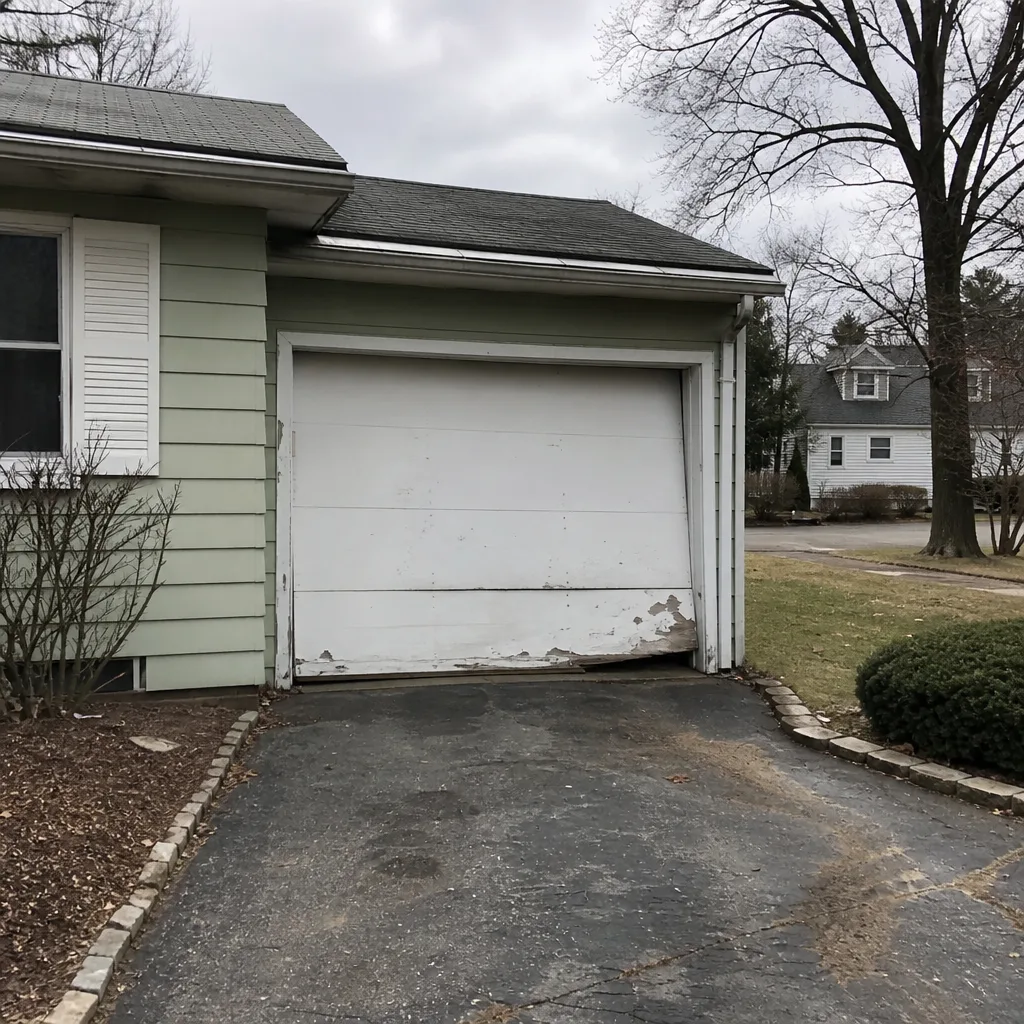 Before
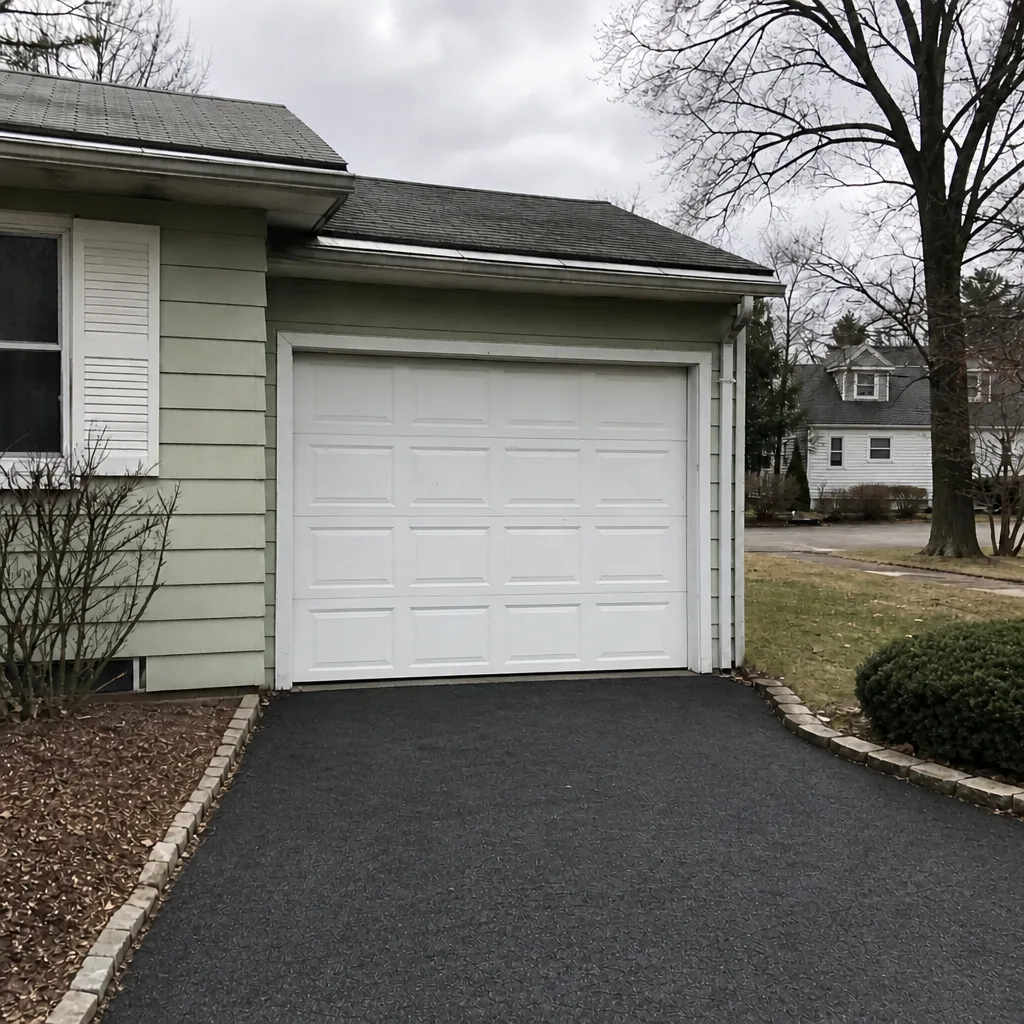 After
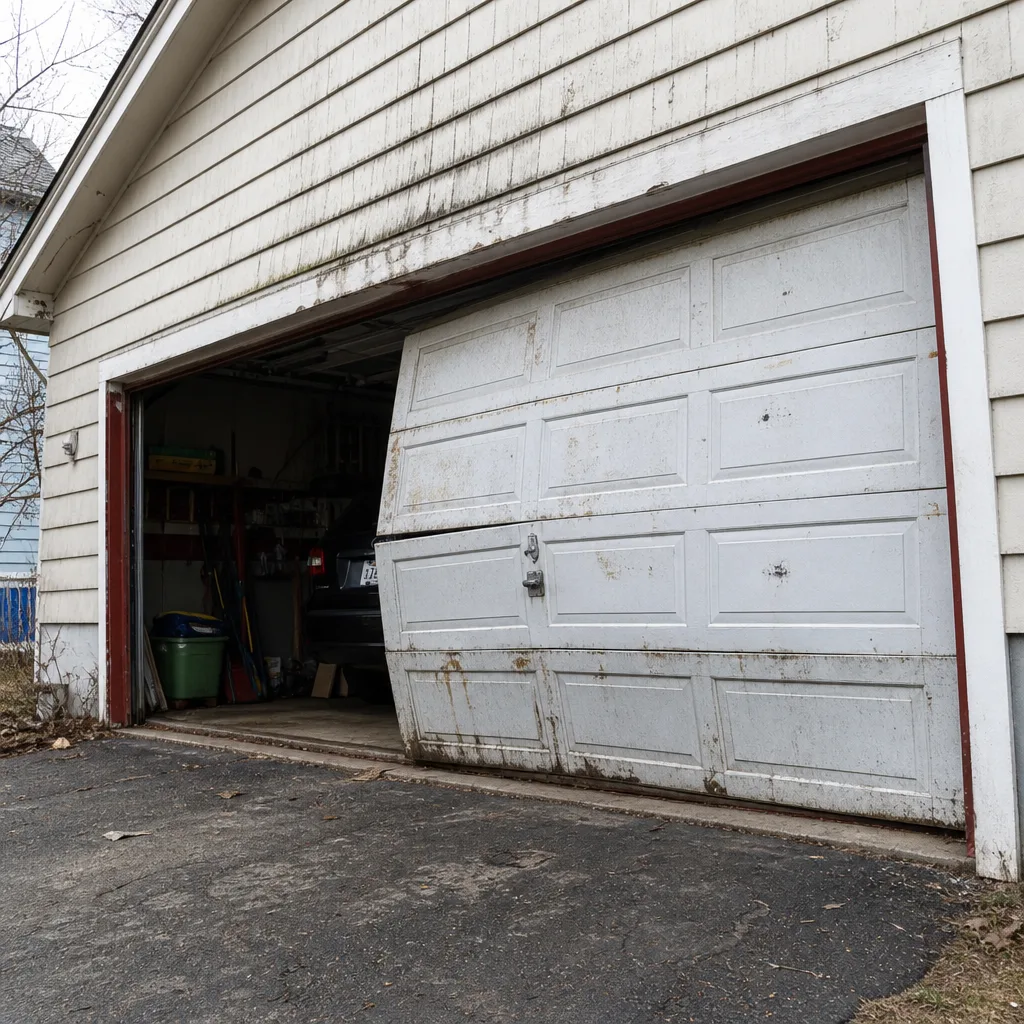 Before
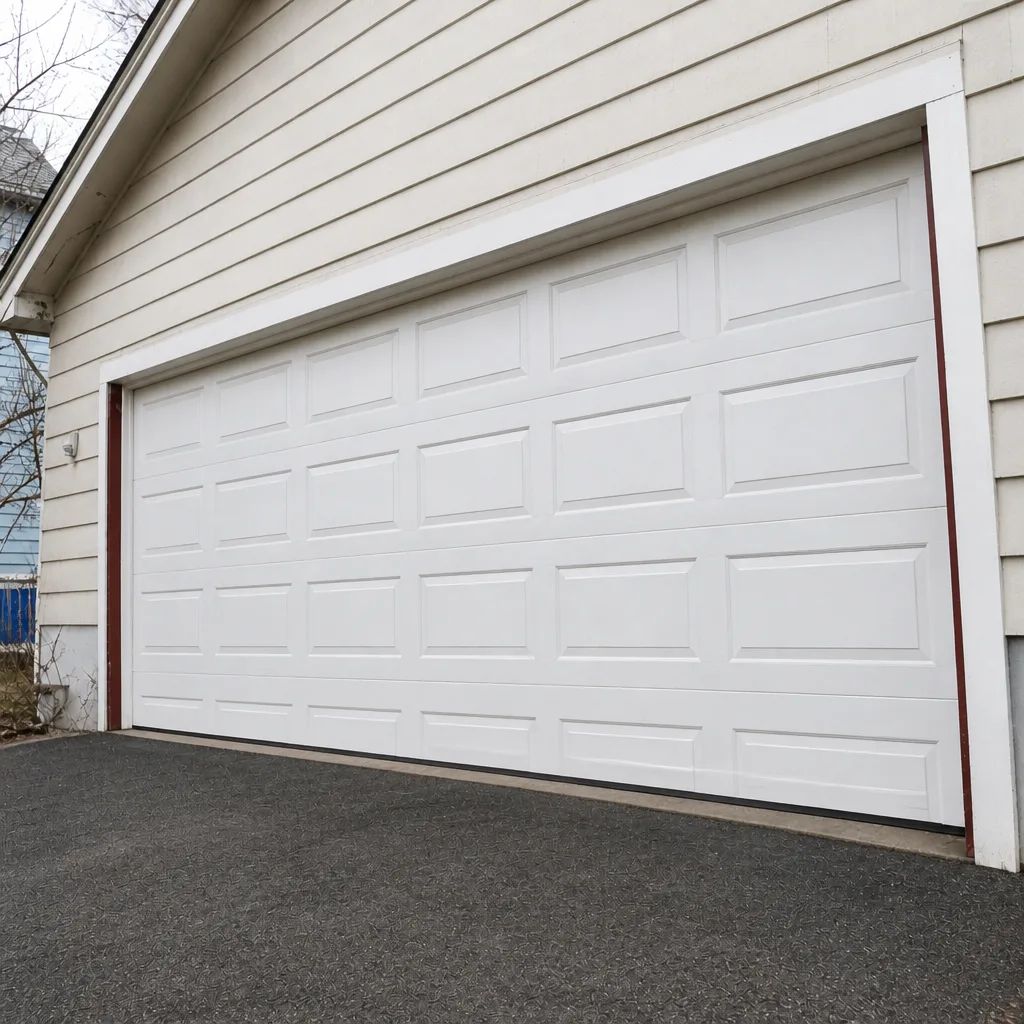 After
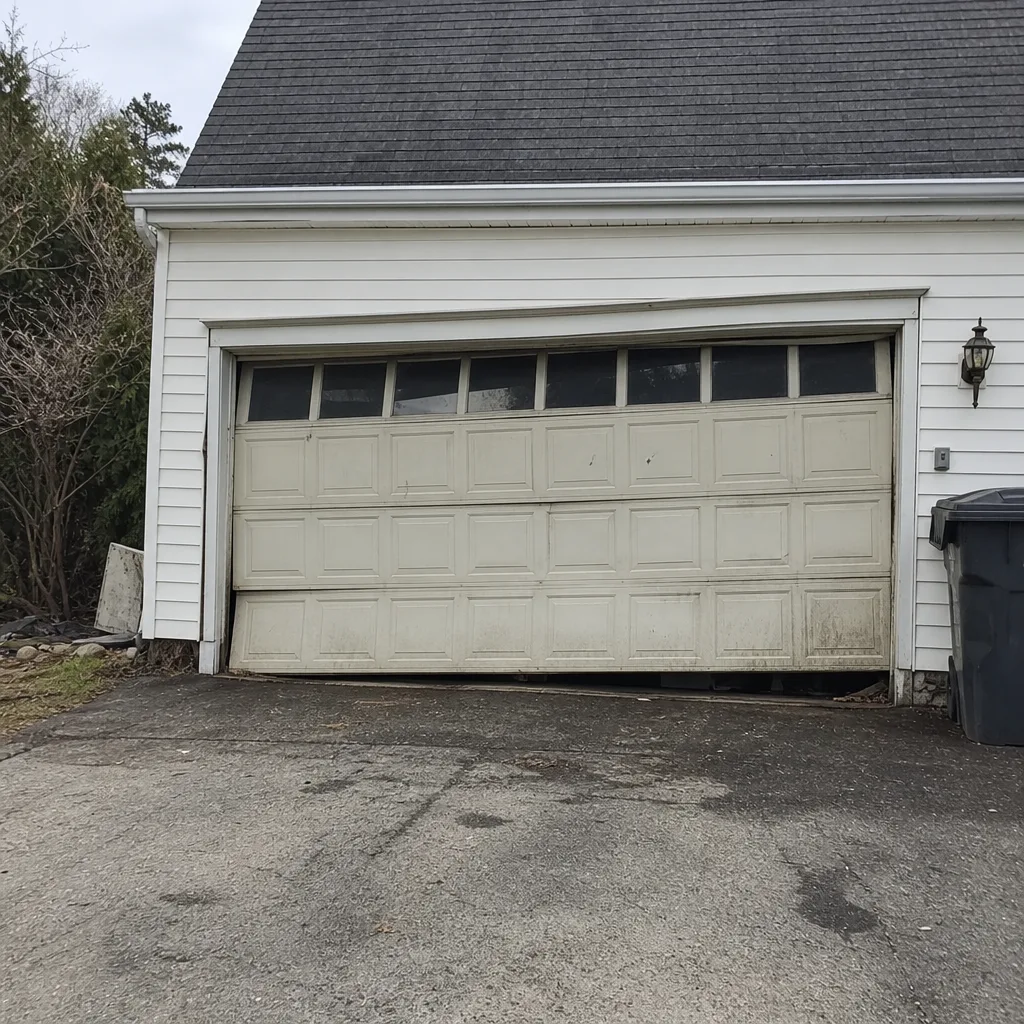 Before
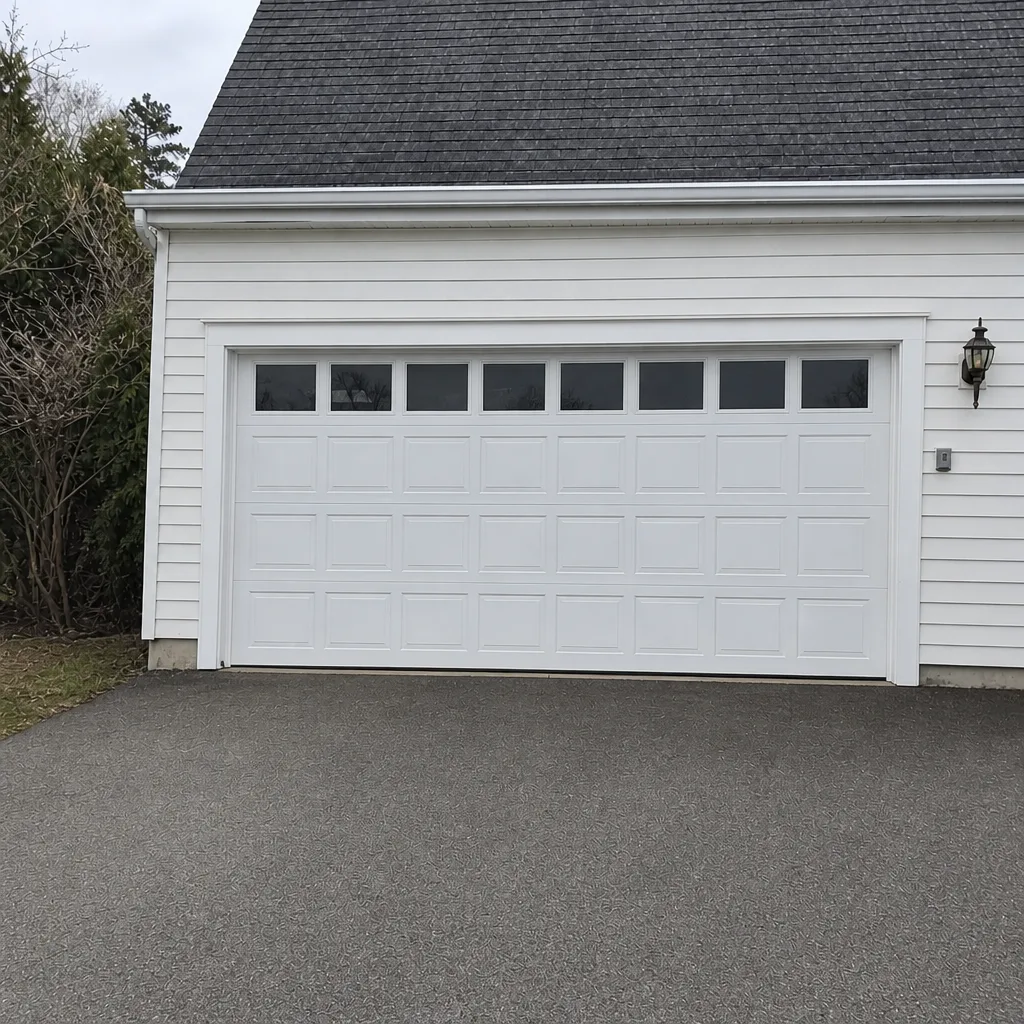 After
When to Call a Professional
Call a professional when a spring breaks, a door hangs crooked or off its track, a cable snaps, or the opener strains to lift the door. Call us if the door won’t reverse safely or you can’t tell what’s wrong after basic checks. Garage Door Repair Waterbury offers free estimates in Waterbury. Our technicians have up to 13 years of experience and arrive prepared for the specific brand on your door, so you get an honest diagnosis before any recommendation. A garage door that’s unsafe or stuck is not a job to put off. Call (888) 839-4780 for a free estimate and a straightforward answer about what your door needs.
Frequently Asked Questions
The most common cause is a broken spring, which makes the door too heavy for the opener to lift. Other causes include a dead opener, a stripped drive gear, or a sensor issue. Start by checking whether the springs are intact before calling.
Spring repair typically runs about $180-$340 for one torsion spring, and a matched pair is roughly twice that because both springs are replaced together. Call (888) 839-4780 for an exact quote; estimates are free.
Yes, in most cases. Opener repair is usually separate from door repair, and a motor, circuit board, or sensor issue can often be fixed without touching the door panels or springs.
We service eight major brands: LiftMaster, Chamberlain, Genie, Clopay, Amarr, Wayne Dalton, Craftsman, and Raynor. That covers the vast majority of residential doors and openers in the area.
No. The default here is repair. The technician diagnoses the actual failure and recommends repair first, so a replacement is only discussed when the door itself is damaged beyond repair.
We connect you with a licensed, insured, and bonded local professional who is vetted for the work. The written estimate is agreed before any work starts, so you know the price before the repair begins.
The Bottom Line
A garage door is a system of door, springs, and opener, and knowing which part failed is what leads to the right repair. Springs do the lifting, the opener handles the push and pull, and the safety sensors keep the door from closing on something. In Waterbury, the seasonal swings put extra strain on hardware, so roller lubrication and track cleaning stretch the life of the system. Fix what’s broken, not the whole door, and get a written estimate that names parts and labor. Call (888) 839-4780 for a free estimate and a straightforward answer.
Written by the team at Garage Door Repair Waterbury.